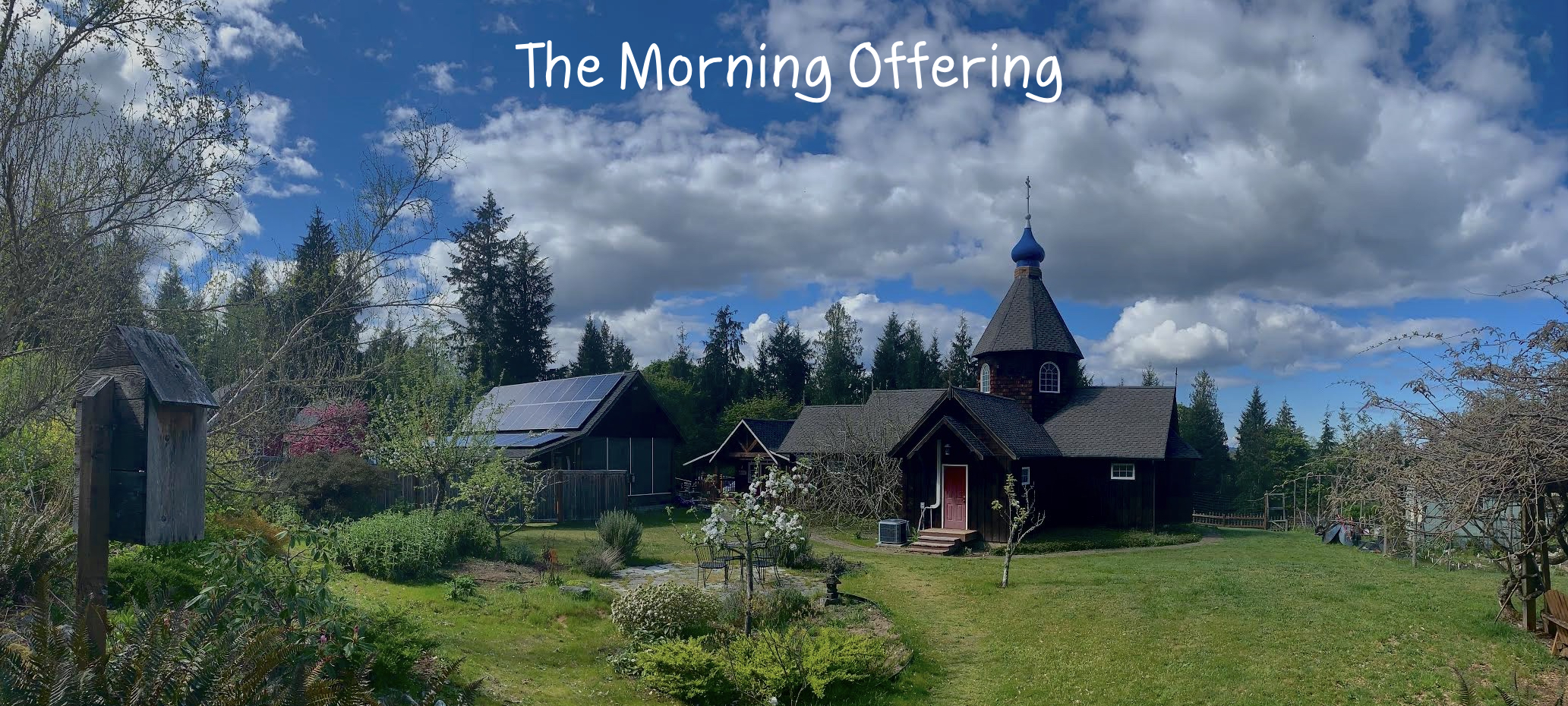
When balance is maintained we can coexist with the environment
Our monastery has two large organic vegetable gardens, for we believe living without chemicals to be much healthier for ourselves and the planet. We raise free range chickens for their organic eggs, because it fits in with our overall view of living as good stewards of the earth, and we hope to one day have solar panels on our property as we further attempt to be an example to the community at large, of sustainable living. We Orthodox Christians should be concerned with how we impact the earth, and sustainability and simple living is all a part of taking better care of our planet as custodians of what God has given us.
Our hens, like all animals, are God’s creatures. They have feelings, as is quite evident to anyone who has raised chickens, and they should be treated with loving care and respect. Raising our own chickens was the result of becoming aware of the pain and suffering “egg factories” inflict on hens, forced, as they are, to live an unspeakably horrific life cramped in small cages, treated as egg producing machines, rather than creatures created by our God. Although we monks will not be eating our hens, for they will live out their lives beyond their egg producing years, if one is going to eat meat he should make sure that animals destined for slaughter be raised with kindness, and not subjected to unnecessary pain and suffering.
As Orthodox monks we hold to the importance of respecting the environment, which requires us to be good stewards of what God has given us. An important part of that stewardship is working towards sustainability, based on a simple principle that everything we need for our survival and well-being, depends, either directly or indirectly, on our natural environment. When balance is maintained, we can coexist with the environment, rather than fight it.
With our goal of sustainability before us, we maintain bee hives, grow as much of our own food as we can, eat eggs from our happy, free range chickens, and limit our use of water. In the winter we keep our thermostats at lower temperatures, and turn off lights when they are not needed. We try as best we can not to waste energy, ever attempting to do our part in giving witness to the importance, as Christians, of caring for this beautiful planet God has given us.
As monks we believe it important to leave as little a “footprint” as possible, always using the natural resources with gratitude before God. A eucharistic ethos means that we must use the natural resources with thankfulness, and offer them back to God. Such an attitude is, for Christians, incompatible with wastefulness. As monks, our ascetic practices remind us that even the simplest foods and the simplest comforts, which have been provided for our needs, are gifts from God. They are not ours to be abused or wasted.
With love in Christ,
Abbot Tryphon
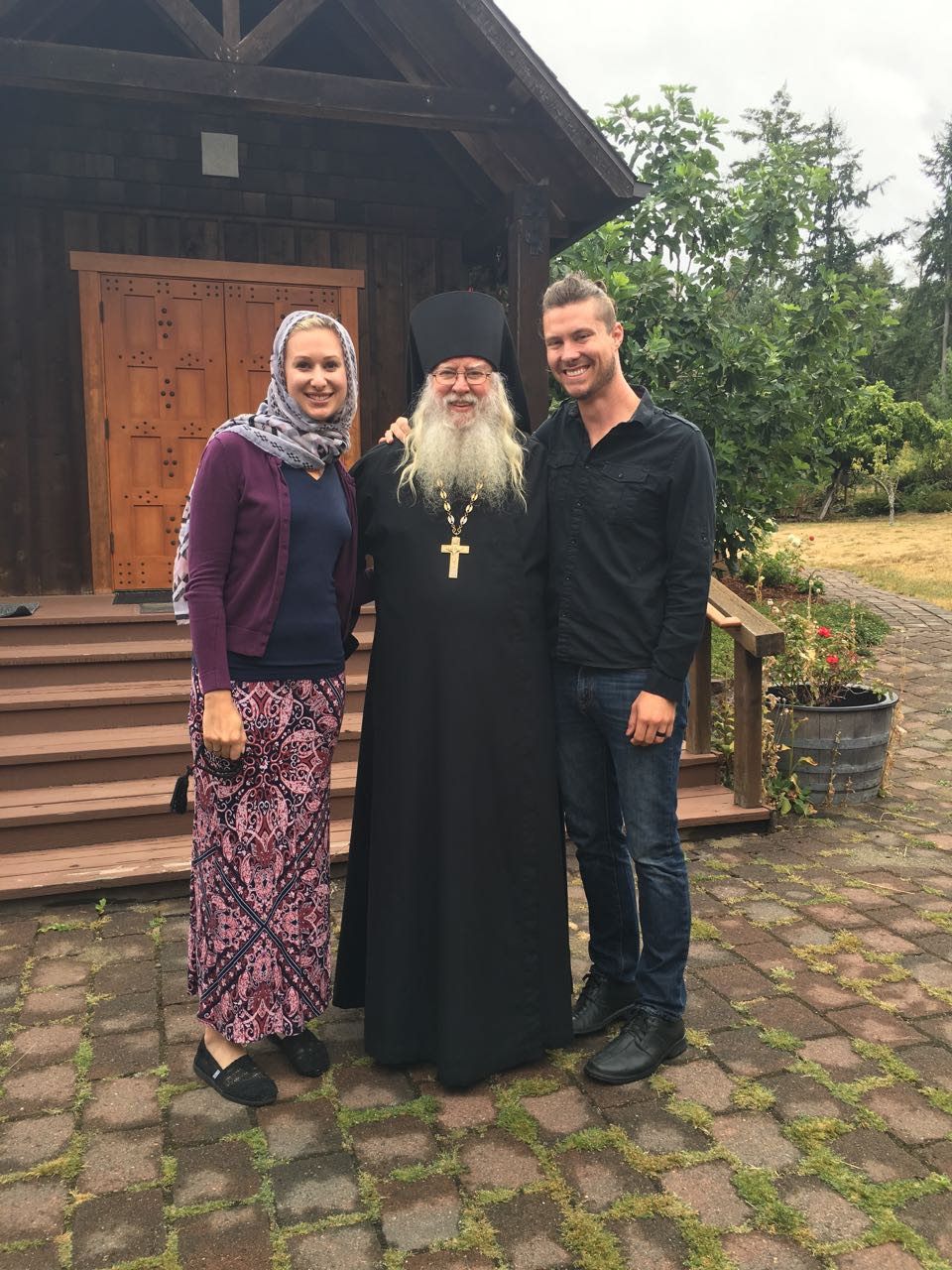
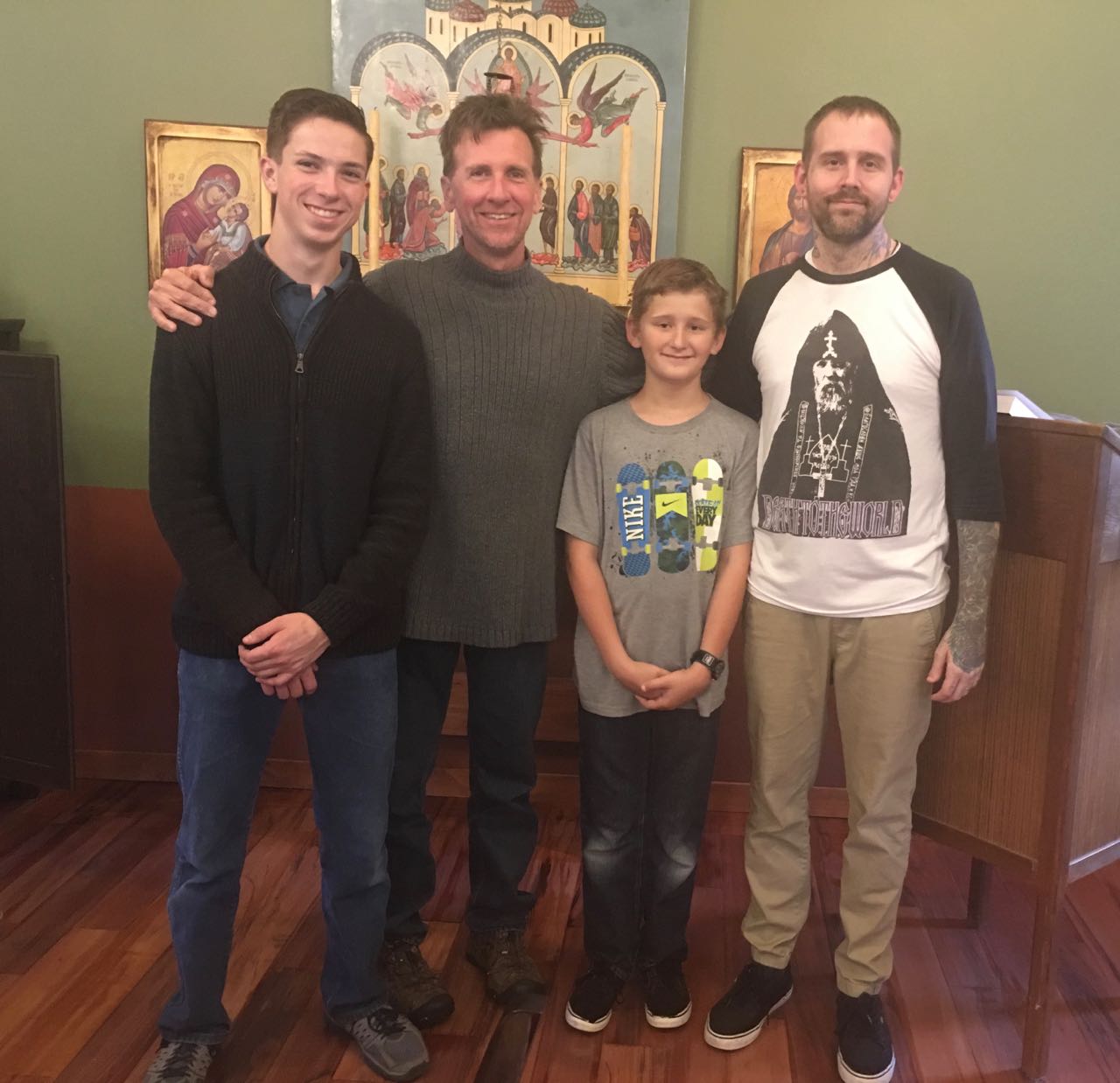
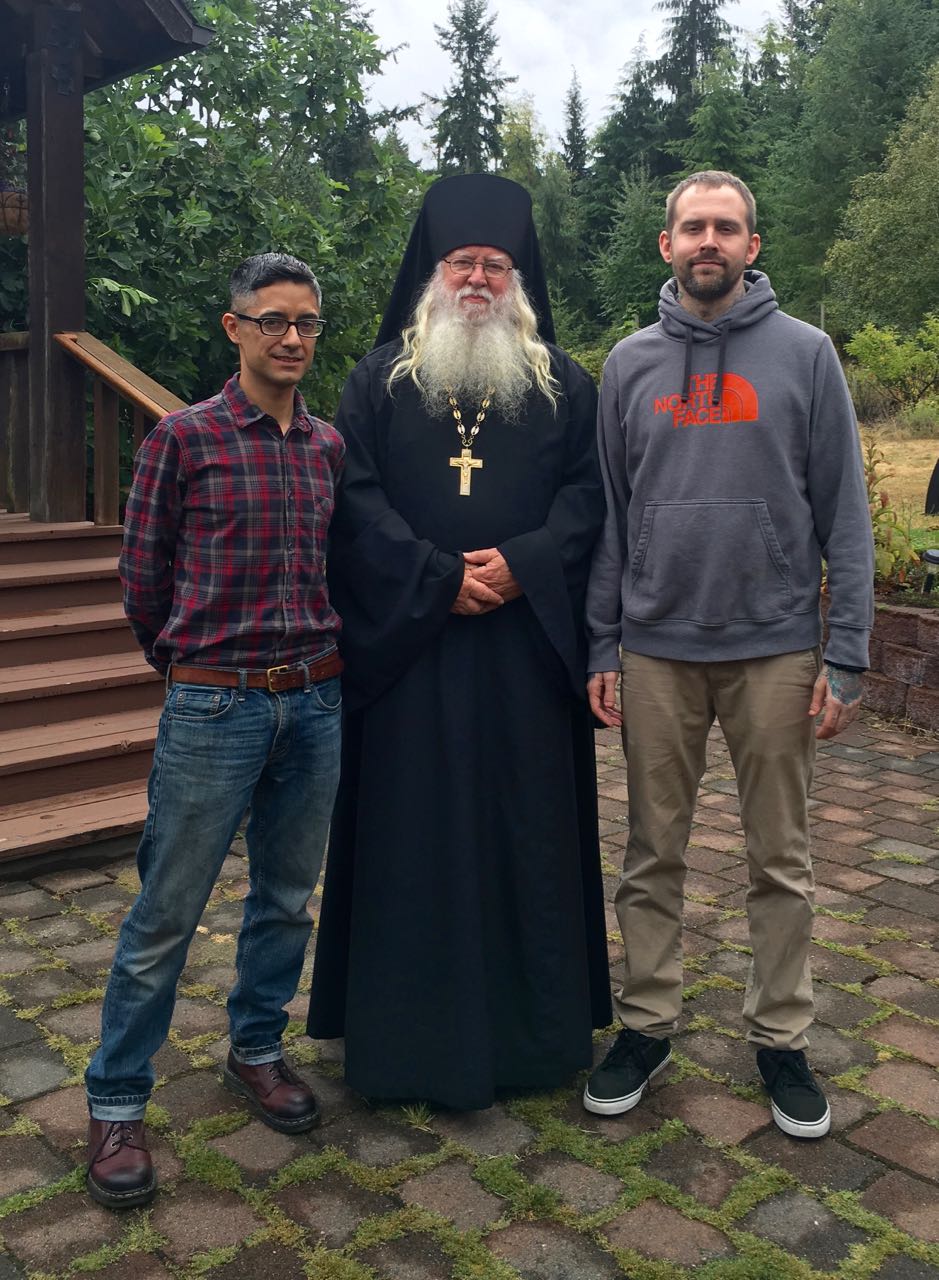
Photos: We were happy to receive as our overnight guests, Shayne Swenson, and his son, Ayden, and John Durka, together with his son, Michael, members of Christ the Saviour Orthodox Church in Spokane, WA. Curt and Kara Sommer, members of Annunciation Orthodox Church in Milwaukie, Oregon, drove up for the Sunday Liturgy. Having these wonderful young people around for the weekend was truly a blessings for this old monk. Paul Huerta, together with his children, also attended the Liturgy. Paul and Shayne (John), are both spiritual sons of mine.
Monday August 8, 2016 / July 26, 2016
8th Week after Pentecost. Tone six.
Hieromartyrs Hermolaus (305), Hermippus, and Hermocrates at Nicomedia.
New Hieromartyr Sergius priest (1937).
Venerable Moses the Hungarian, of the Kiev Caves (1043).
Martyr Parasceve of Rome (138).
St. Iakov (Netsvetov) of Atka-Island and Ikogmute, mission priest to the Yup’ik on the Yukon River (1867).
Martyr Oriozela of Reuma in Byzantium (ca. 250) (Greek).
Venerable Ignatius, monk, of Mt. Stirion (Greek).
Virgin-martyr Jerusalem of Byzantium (Greek). /font>
Venerable Gerontius, founder of the Skete of St. Anne, Mt. Athos (13th c.) (Greek).
St. Sava III, archbishop of Serbia (1316) (Greek).
Scripture Readings
1 Corinthians 9:13-18
13 Do you not know that those who minister the holy things eat of the things of the temple, and those who serve at the altar partake of the offerings of the altar? 14 Even so the Lord has commanded that those who preach the gospel should live from the gospel.
15 But I have used none of these things, nor have I written these things that it should be done so to me; for it would be better for me to die than that anyone should make my boasting void. 16 For if I preach the gospel, I have nothing to boast of, for necessity is laid upon me; yes, woe is me if I do not preach the gospel! 17 For if I do this willingly, I have a reward; but if against my will, I have been entrusted with a stewardship. 18 What is my reward then? That when I preach the gospel, I may present the gospel of Christ without charge, that I may not abuse my authority in the gospel.
Matthew 16:1-6
The Pharisees and Sadducees Seek a Sign
16 Then the Pharisees and Sadducees came, and testing Him asked that He would show them a sign from heaven. 2 He answered and said to them, “When it is evening you say, ‘It will be fair weather, for the sky is red’; 3 and in the morning, ‘It will be foul weather today, for the sky is red and threatening.’ Hypocrites! You know how to discern the face of the sky, but you cannot discern the signs of the times. 4 A wicked and adulterous generation seeks after a sign, and no sign shall be given to it except the sign of the prophetJonah.” And He left them and departed.
The Leaven of the Pharisees and Sadducees
5 Now when His disciples had come to the other side, they had forgotten to take bread. 6 Then Jesus said to them, “Take heed and beware of the leaven of the Pharisees and the Sadducees.”
Good post Father…