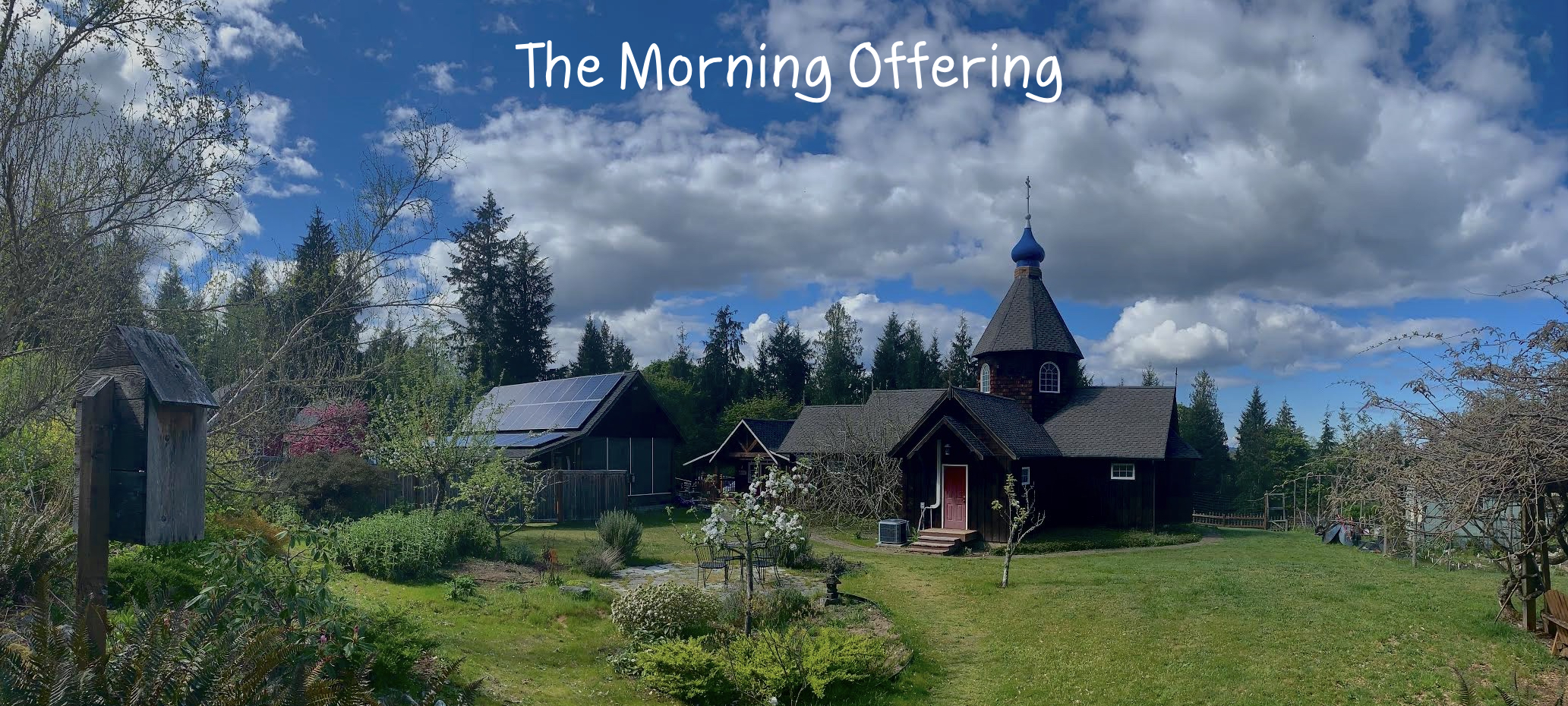
The God of Christianity is one Who invites us into a relationship

One of the primary differences between Islam and Christianity has to do with the basic view of the nature of God. Islam teaches total surrender to a god who demands submission. There is no invitation to enter into a relationship, freely, nor is there room for an individual to choose, or not choose, to love his Creator, for the god of the Muslims is far above his creation. In Islam there is no real possibility of having a personal relationship with their god.
By contrast, the God of Christianity is one Who invites us into a relationship that is personal, and like all personal relationships based on love, we are free to choose, or not, to commune with a God Who is, by His very nature, in relationship. Our God is worshiped in Trinity, and this image of the Trinity is the basis of the image of the Church, which is one of mutual love. The God we worship in Trinity, Father, Son and Holy Spirit, is One God, and our response to the invitation from this One God, is to enter into communion with our nous, our soul, and our body, our own triune nature.
There is no force behind this invitation, for we are free to choose, or not, just as any relationship based on love allows both parties to be free to choose, or not. Our obedience is a religious act that must be free, and it must be based on love.
Our Lord Jesus Christ taught using parables, precisely because he was inviting us to freely choose to follow him, and to keep the commandments. He showed us the way to eternal life, not by giving commands as the Son of God, but by being a loving teacher Whose wisdom was imparted in a way that left the choice up to us. His Apostle Peter demonstrated this same style of teaching when he told his fellow disciples that he was going fishing. Peter didn’t say they were going fishing, but only that he was going fishing, thus leaving his friends with a choice. They were free to go fishing, or not.
Muhammad, by contrast, gave his followers specific laws that must be followed, including total submission to god, and should they ever renounce Islam, they would face a penalty of death. This lack of freedom in the teachings of Muhammad has its roots in his failure to teach about the notion of person.
In Christ we have the image of the Pantocrator, a fresco that is traditionally the primary focus in the dome of an Orthodox temple. The Pantocrator is He Who holds all things in His hands, through His love and forbearance. This God of Christianity does not punish, He educates, just as Christ educated his disciples through the use of parables.
With love in Christ,
Abbot Tryphon
Photo: Mar-Awa, bishop of California of the Assyrian Church of the East, visited the monastery on Saturday, together with his deacon. I was honored to hear that the bishop is a regular reader of my blog, The Morning Offering, and a listener of my Ancient Faith Radio podcasts.
Sunday June 5, 2016 / May 23, 2016
Sixth Sunday of Pascha: The Blind Man. Tone five.
Synaxis of Hieromartyrs of Kholmsk and Podliash (movable holiday on the Sunday after May 19th).
Venerable Michael the Confessor, bishop of Synnada (818).
Uncovering of the relics (1164) of St. Leontius, bishop and wonderworker of Rostov (1077).
Synaxis of All Saints of Rostov and Yaroslavl: Bishop Leontius (1073), Bishop Isaiah, wonderworker (1090), Bishop Ignatius (1288), Bishop James (1391), Archbishop Theodore (1394), Metropolitan Demetrius (1709), Archimandrite Abraham the wonderworker (1073-1077), Monk Irinarchus the Hermit (1616). Prince Basil ( 1238), Peter, Tsarevich of Ordynsk (1290) Blessed Isidore, Fool-for-Christ (1474) Blessed John of the Hair-Shirt (the Merciful), Fool-for-Christ (1580); Yaroslav Wonderworkers: Princes Basil (1249), Constantine (1257), Theodore (1299) and his sons David (1321) and Constantine (XIV); Pereslavl Wonderworkers: Monk Nikita the Stylite (1186), Monk Daniel the Archimandrite (1540), Prince Alexander Nevsky (1263), Prince Andrew of Smolensk (15th c.); Uglich Wonderworkers: Monk Paisius (1504), Monk Cassian (1504), Monk Ignatius of Lomsk (1591), Prince Roman (1285), Tsarevich Demetrius (1591); Poshekhonsk Wonderworkers: Monk Sylvester of Obnora (1379), Monk Sebastian (1542), Hieromartyr Adrian (1550), Monk Gennadius of Liubimograd and Kostroma (1565)
Venerable Euphrosyne, princess of Polotsk (1173).
Venerable Paisius, abbot, of Galich (1463)
Martyr
Michael “the black-robed” of St. Sabbas’ Monastery (9th c.).
Holy Myrrh-bearer Mary, wife of Cleopas.
Martyr Salonas the Roman (Greek).
Martyr Seleucus (Greek).
Venarable Damiane (King Demetrius) (1157) (Georgia).
St. Ioannicius I, archbishop of Serbia (1270).
Scripture Readings
Acts 16:16-34
Paul and Silas Imprisoned
16 Now it happened, as we went to prayer, that a certain slave girl possessed with a spirit of divination met us, who brought her masters much profit by fortune-telling. 17 This girl followed Paul and us, and cried out, saying, “These men are the servants of the Most High God, who proclaim to us the way of salvation.” 18 And this she did for many days.
But Paul, greatly annoyed, turned and said to the spirit, “I command you in the name of Jesus Christ to come out of her.” And he came out that very hour. 19 But when her masters saw that their hope of profit was gone, they seized Paul and Silas and dragged them into the marketplace to the authorities.
20 And they brought them to the magistrates, and said, “These men, being Jews, exceedingly trouble our city; 21 and they teach customs which are not lawful for us, being Romans, to receive or observe.” 22 Then the multitude rose up together against them; and the magistrates tore off their clothes and commanded them to be beaten with rods. 23 And when they had laid many stripes on them, they threw them into prison, commanding the jailer to keep them securely. 24 Having received such a charge, he put them into the inner prison and fastened their feet in the stocks.
The Philippian Jailer Saved
25 But at midnight Paul and Silas were praying and singing hymns to God, and the prisoners were listening to them. 26 Suddenly there was a great earthquake, so that the foundations of the prison were shaken; and immediately all the doors were opened and everyone’s chains were loosed. 27 And the keeper of the prison, awaking from sleep and seeing the prison doors open, supposing the prisoners had fled, drew his sword and was about to kill himself. 28 But Paul called with a loud voice, saying, “Do yourself no harm, for we are all here.”
29 Then he called for a light, ran in, and fell down trembling before Paul and Silas. 30 And he brought them out and said, “Sirs, what must I do to be saved?”
31 So they said, “Believe on the Lord Jesus Christ, and you will be saved, you and your household.” 32 Then they spoke the word of the Lord to him and to all who were in his house. 33 And he took them the same hour of the night and washed their stripes. And immediately he and all his family were baptized. 34 Now when he had brought them into his house, he set food before them; and he rejoiced, having believed in God with all his household.
John 9:1-38
A Man Born Blind Receives Sight
9 Now as Jesus passed by, He saw a man who was blind from birth. 2 And His disciples asked Him, saying, “Rabbi, who sinned, this man or his parents, that he was born blind?”
3 Jesus answered, “Neither this man nor his parents sinned, but that the works of God should be revealed in him. 4 I must work the works of Him who sent Me while it is day; the night is coming when no one can work. 5 As long as I am in the world, I am the light of the world.”
6 When He had said these things, He spat on the ground and made clay with the saliva; and He anointed the eyes of the blind man with the clay. 7 And He said to him, “Go, wash in the pool of Siloam” (which is translated, Sent). So he went and washed, and came back seeing.
8 Therefore the neighbors and those who previously had seen that he was blind said, “Is not this he who sat and begged?”
9 Some said, “This is he.” Others said, “He is like him.”
He said, “I am he.”
10 Therefore they said to him, “How were your eyes opened?”
11 He answered and said, “A Man called Jesus made clay and anointed my eyes and said to me, ‘Go to the pool of Siloam and wash.’ So I went and washed, and I received sight.”
12 Then they said to him, “Where is He?”
He said, “I do not know.”
The Pharisees Excommunicate the Healed Man
13 They brought him who formerly was blind to the Pharisees. 14 Now it was a Sabbath when Jesus made the clay and opened his eyes. 15 Then the Pharisees also asked him again how he had received his sight. He said to them, “He put clay on my eyes, and I washed, and I see.”
16 Therefore some of the Pharisees said, “This Man is not from God, because He does not keep the Sabbath.”
Others said, “How can a man who is a sinner do such signs?” And there was a division among them.
17 They said to the blind man again, “What do you say about Him because He opened your eyes?”
He said, “He is a prophet.”
18 But the Jews did not believe concerning him, that he had been blind and received his sight, until they called the parents of him who had received his sight. 19 And they asked them, saying, “Is this your son, who you say was born blind? How then does he now see?”
20 His parents answered them and said, “We know that this is our son, and that he was born blind; 21 but by what means he now sees we do not know, or who opened his eyes we do not know. He is of age; ask him. He will speak for himself.” 22 His parents said these things because they feared the Jews, for the Jews had agreed already that if anyone confessed that He was Christ, he would be put out of the synagogue. 23 Therefore his parents said, “He is of age; ask him.”
24 So they again called the man who was blind, and said to him, “Give God the glory! We know that this Man is a sinner.”
25 He answered and said, “Whether He is a sinner or not I do not know. One thing I know: that though I was blind, now I see.”
26 Then they said to him again, “What did He do to you? How did He open your eyes?”
27 He answered them, “I told you already, and you did not listen. Why do you want to hear it again? Do you also want to become His disciples?”
28 Then they reviled him and said, “You are His disciple, but we are Moses’ disciples. 29 We know that God spoke to Moses; as forthis fellow, we do not know where He is from.”
30 The man answered and said to them, “Why, this is a marvelous thing, that you do not know where He is from; yet He has opened my eyes! 31 Now we know that God does not hear sinners; but if anyone is a worshiper of God and does His will, He hears him. 32 Since the world began it has been unheard of that anyone opened the eyes of one who was born blind. 33 If this Man were not from God, He could do nothing.”
34 They answered and said to him, “You were completely born in sins, and are you teaching us?” And they cast him out.
True Vision and True Blindness
35 Jesus heard that they had cast him out; and when He had found him, He said to him, “Do you believe in the Son of God?”
36 He answered and said, “Who is He, Lord, that I may believe in Him?”
37 And Jesus said to him, “You have both seen Him and it is He who is talking with you.”
38 Then he said, “Lord, I believe!” And he worshiped Him.
Thank you father for again highlighting the differnces between Islam and Christianity. I do hope you will continue to do this on a regular basis. Sadly, too few voices in the churches seem to have your backbone or courage to express in love, the truth.
Dear Abbot Tryphon, and the monastic brother of All-Merciful Savior Monastery: I would like to express my sincere gratitude for your welcoming spirit and hospitality on my visit yesterday. I and the faithful with me were very pleased to have met you in person. Your blog is very befitting for the joy in the Spirit we all felt in our time of visit and prayer together. May the prayer of Christ our God and Savior, expressed in John 17:21 be our own. I have no doubt that you live by that prayer; let us pray for the unity of all of the holy Churches of God. I will keep you and the brethren in prayer; please do the same.
Your brother in Christ the Lord,
+mar awa
Dear Fr. Tryphon, Would you please give me a definition of soul and the nous. I have read definitions, but a clear understanding still evades me.
Love in Christ,
Bonnie Karraz
The Nous is the Eye of the Soul, implanted at the moment of conception, and giving us the ability to respond to God’s invitation to commune with Him.