The healing medicine for what ails us
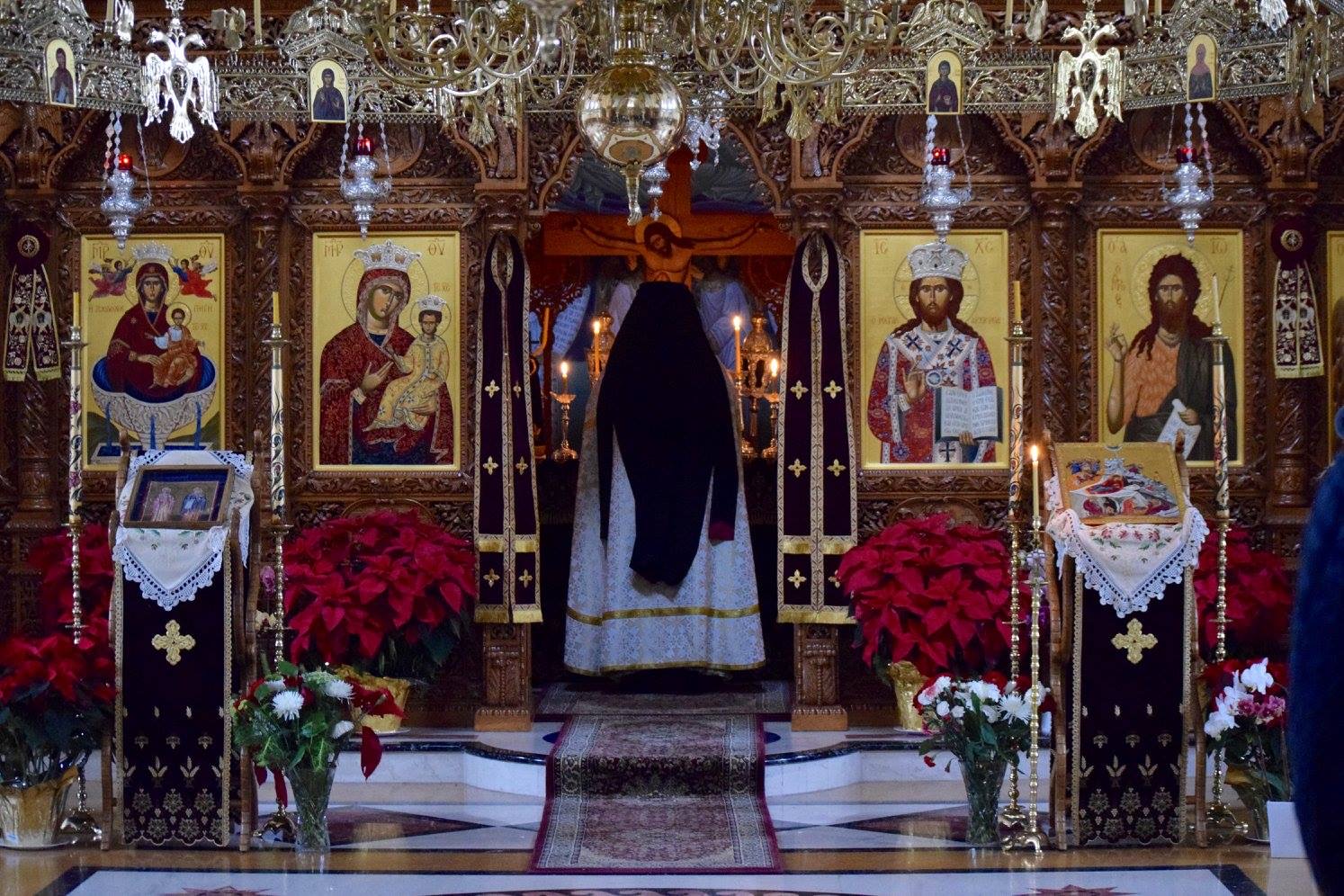
Eternity is an everlasting banquet (the Divine Liturgy) that takes place in the heavenly realm. Every time we participate in the Divine Liturgy we are transported into a place where there is neither time nor space, and participate in that very banquet. As we receive the Holy Mysteries (Christ’s very Body and Blood), we receive the healing medicine for that which ails us. Our brokenness in both body and soul are given the healing medicine that we so very much need.
God is everywhere present and fills all things. There is no place where He is not. Hell fire is none other than the Fire of God, burning those who are unloving and unresponsive to His invitation to commune with Him. God does not send anyone to hell, for we sentence ourselves. Eternity with God necessitates a transformation of our souls, that we be purified in order to be engulfed by God’s uncreated light. Without transformation the fire of God burns us, not because He desires we be burned, but because our fallen nature can not withstand the presence of God without having been purified.
The Eucharist is the very medicine that God designed for this transformation. Our response should be one of humble submission to this invitation to commune with the very God Who created us. Holy Communion is meant to be the very agent that changes us, making us whole. The Holy Mysteries give us life. Frequent confession and communion are the means we have for change.
The Eucharist is both mystical and symbolic and is understood to be the genuine Body and Blood of Christ, precisely because bread and wine are the mysteries and symbols of God’s true and genuine presence and His manifestation to us in Christ.
The Holy Eucharist defies analysis and explanation in purely rational and logical terms, precisely because it is a mystery. The Eucharist, as is Christ himself, is a mystery of the Kingdom of Heaven which, as Jesus has told us, is “not of this world.” The Eucharist, because it belongs to God’s Kingdom, is truly free from the earth-born “logic” of fallen humanity.
Saint John of Damascus says, “If you enquire how this happens, it is enough for you to learn that it is through the Holy Spirit … we know nothing more than this, that the word of God is true, active, and omnipotent, but in its manner of operation unsearchable”.
Love in Christ,
Abbot Tryphon
Thursday June 29, 2017 / June 16, 2017
4th Week after Pentecost. Tone two.
Apostles’ (Peter & Paul) Fast. Fish Allowed
St. Tychon, bishop of Amathus in Cyprus (425).
Venerable Tikhon of Kaluga or Medin (1492).
Venerable Tikhon of Lukhov (1503).
Venerable Moses of Optina, founder of the Optina Skete (1862).
New Martyr Hermogenes (Germogen), bishop of Tobolsk, Euphremius, Michael and Peter priests and Martyr Constantine (1918).
Translation of the relics (2002) of St. Theophan the Recluse, bishop of Tambov (1894).
Martyrs Tigrius and Eutropius of Constantinople (404).
Venerable Tikhon of Krestogorsk (Vologda).
St. Mark the Just of Apollonias, nephew of the Apostle Barnabas.
Five Martyrs of Nicomedia (Greek).
Forty Martyrs of Rome (Greek).
St. Kaikhosro the Georgian (1612) (Georgia).
St. Ismael, bishop of Menevia.
The Scripture Readings
Romans 11:13-24
13 For I speak to you Gentiles; inasmuch as I am an apostle to the Gentiles, I magnify my ministry, 14 if by any means I may provoke to jealousy those who are my flesh and save some of them. 15 For if their being cast away is the reconciling of the world, what will their acceptance be but life from the dead?
16 For if the firstfruit is holy, the lump is also holy; and if the root is holy, so are the branches. 17 And if some of the branches were broken off, and you, being a wild olive tree, were grafted in among them, and with them became a partaker of the root and fatness of the olive tree, 18 do not boast against the branches. But if you do boast, remember that you do not support the root, but the root supports you.
19 You will say then, “Branches were broken off that I might be grafted in.” 20 Well said. Because of unbelief they were broken off, and you stand by faith. Do not be haughty, but fear. 21 For if God did not spare the natural branches, He may not spare you either. 22 Therefore consider the goodness and severity of God: on those who fell, severity; but toward you, goodness, if you continue in His goodness. Otherwise you also will be cut off. 23 And they also, if they do not continue in unbelief, will be grafted in, for God is able to graft them in again. 24 For if you were cut out of the olive tree which is wild by nature, and were grafted contrary to nature into a cultivated olive tree, how much more will these, who are natural branches, be grafted into their own olive tree?
Matthew 11:27-30
27 All things have been delivered to Me by My Father, and no one knows the Son except the Father. Nor does anyone know the Father except the Son, and the one to whom the Son wills to reveal Him. 28 Come to Me, all you who labor and are heavy laden, and I will give you rest. 29 Take My yoke upon you and learn from Me, for I am gentle and lowly in heart, and you will find rest for your souls.30 For My yoke is easy and My burden is light.”
Father bless!
There is a lot in this short piece expressed with simplicity and economy. We often need reminders more than information. Very well done!
Father Bless, I have heard that there are sins that are repented of in confession, but due to the nature of the sin, the church through the priest does not allow Communion for a period of time. Am I speaking correctly? If I am, then I have never understood this practice. I would think that after a serious sin that was repented of and then forgiven, that would be the time that one would need the healing and transforming power of the Body and Blood of Christ the most.
It depends on the priest hearing those confessions.