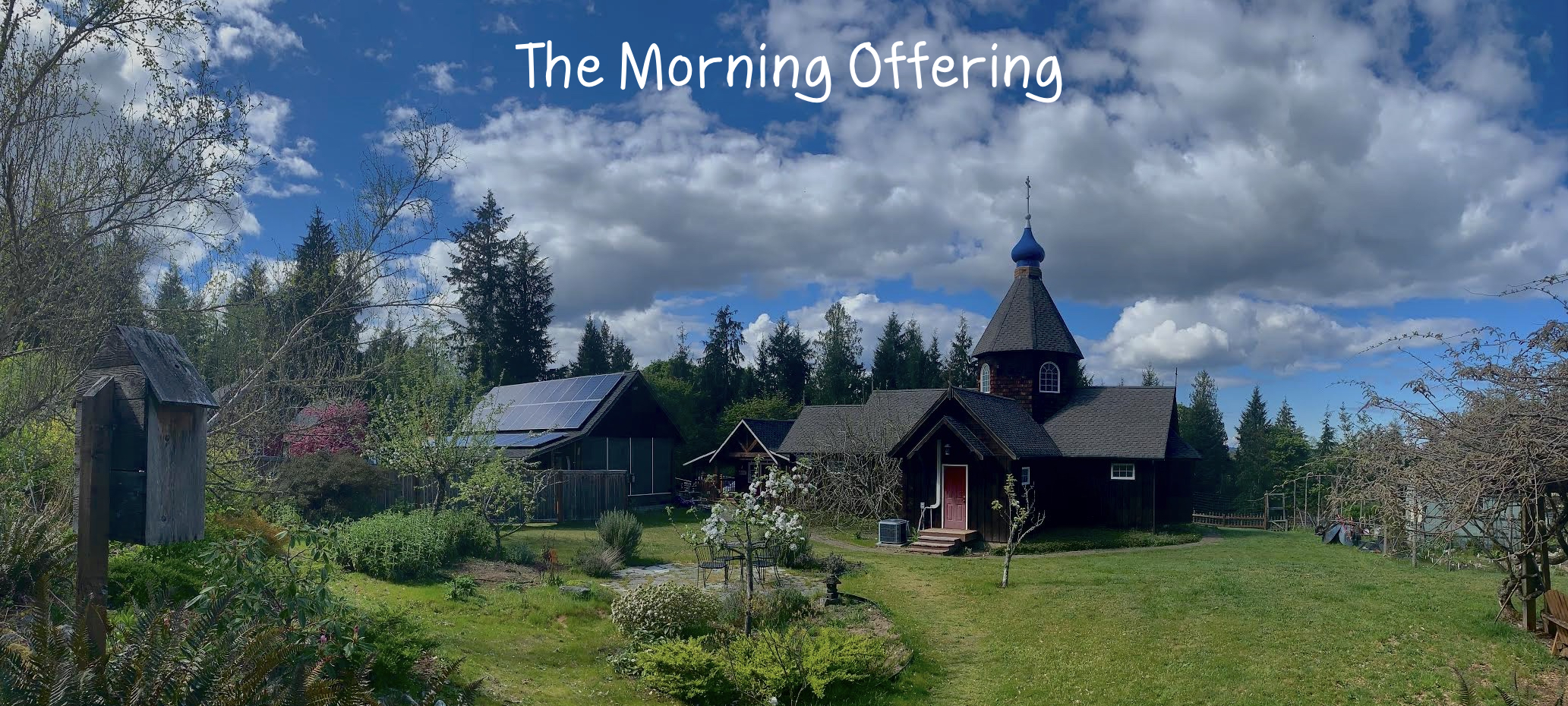
A place for spiritual healing

Monastics are an integral part of the Church and should not be seen as independent of the Church Universal. Monks are bound by the same Gospel as other Christians and should avail themselves to the missionary and pastoral needs of the Church. Although the primary role of monasticism is to be found in worship and contemplative prayer, monks also have a long history as missionaries.
Many of the great monasteries of Russia, for example, were founded in remote places but became centers of pilgrimage. Whole cities often formed around these monasteries, precisely because the monks had reached out with the Gospel and worked among the people. Where there was a need, monks responded with charity and evangelical witness.
In these difficult times where people are suffering economic hardship, loss of jobs and foreclosure on homes, monks can bring a different perspective to those who’ve lost all hope. Monasteries become centers of spiritual healing and empowerment. People who have been struggling to find meaning in their lives can walk away with a new vision, gained through the interior work of the monks, who have availed themselves as spiritual therapists for those who are hurting.
The strength of Orthodox monasticism is not to be found in the sameness of every monastery, for each monastic community has its own expression, often quite different from other monasteries. In Greece and Russia, there are monastic communities that run printing presses, care for the elderly and infirm, run Orthodox bookstores in cities, live as hermits, run large retreat facilities, teach in schools, and even, on occasion, serve parishes.
Monasticism is not something that is mastered through academic pursuits, but is rather acquired over many years of struggle, through obedience, long nights of prayer, ascetical practice, and communal life. A monastic, who is true to his vocation, will see himself as just a beginner, even though he may have been a monk for forty years, for he realizes how far he is from the perfection that comes with total surrender to Christ.
Many would wish to see monasticism in a romantic way, with monks quietly and silently living out hidden lives, yet there are monks who work with people as spiritual fathers, preachers, teachers, and participating in an active way in service to the world. Each monk, and each monastery, is called apart for the service to the Church, as God wishes. Thus, it is dangerous when we judge a monastery or a monk based on our own fanciful image of what we think they should be like, for even on the Holy Mountain of Athos, there are many varieties of monastic expression, none being better than the other, and all based on the prompting of the Holy Spirit. Monks attempt to live out the evangelical life of the Gospels, in imitation of Christ.
Although the Orthodox Church does not have religious orders as the Latin Church does, there are in Orthodoxy different styles of monastic life, both individually and in community expression. Some monasteries may be contemplative, and set apart from society, while others are given over to the spiritual guidance, offering support and care to pilgrims. These various styles of monasticism are not formally predetermined or officially legislated, but are the result of organic development by the inspiration of the Holy Spirit.
Yet all monastics share the common vows of poverty, chastity, stability, and obedience, ever following the words of Christ which are the cornerstone for this life, “be ye perfect as your heavenly Father is perfect.”
With love in Christ,
Abbot Tryphon
Photo: The Holy Brotherhood of the All-Merciful Saviour. Left to right: Novice Apollos, Hieromonk Paul, Abbot Tryphon, Monk Martin, and Novice Peter.
Tuesday October 4, 2016 / September 21, 2016
16th Week after Pentecost. Tone six.
Apodosis of the Exaltation of the Cross.
Apostle Quadratus of the Seventy (130).
Uncovering of the relics (1752) of St. Demetrius, metropolitan of Rostov (1709).
New Hieromartyrs Alexander, Alexis, Constantine, John priests (1918).
New Hieromartyr Mavrikius and with him Martyr Basil and Vladimir (1937).
New Hieromartyrs Valentin, Alexander, John, Andrew, Peter, John priests (1937).
New Hieromartyr Theophan (Tuliakov), metropolitan of Lipetsk and Belo-Russia (1937).
New Hieromartyr John priest (1938).
New Hieromartyr Basil priest (1942).
Venerable Daniel, abbot of Shugh Hill (Novgorod) (16th c.).
Venerable Joseph of Zaonikiev Monastery (Vologda) (1612).
Hieromartyr Hypatius, bishop of Ephesus, and his presbyter Andrew (730).
Sts. Isaacius and Meletius, bishops of Cyprus.
Martyr Eusebius of Phoenicia (2nd c.) and Martyr Priscus of Phrygia.
Martyrs Eusebius, Nestabus, Zeno, and Nestor the Confessor of Gaza (4th c.).
Venerable Jonah the Sabbaite (9th c.) (Greek).
Synaxis of All Saints of Uglich.
Scripture Readings
John 10:1-9
Jesus the True Shepherd
10 “Most assuredly, I say to you, he who does not enter the sheepfold by the door, but climbs up some other way, the same is a thief and a robber. 2 But he who enters by the door is the shepherd of the sheep. 3 To him the doorkeeper opens, and the sheep hear his voice; and he calls his own sheep by name and leads them out. 4 And when he brings out his own sheep, he goes before them; and the sheep follow him, for they know his voice. 5 Yet they will by no means follow a stranger, but will flee from him, for they do not know the voice of strangers.” 6 Jesus used this illustration, but they did not understand the things which He spoke to them.
Jesus the Good Shepherd
7 Then Jesus said to them again, “Most assuredly, I say to you, I am the door of the sheep. 8 All who ever came before Me are thieves and robbers, but the sheep did not hear them. 9 I am the door. If anyone enters by Me, he will be saved, and will go in and out and find pasture.
Galatians 5:11-21
11 And I, brethren, if I still preach circumcision, why do I still suffer persecution? Then the offense of the cross has ceased. 12 I could wish that those who trouble you would even cut themselves off!
13 For you, brethren, have been called to liberty; only do not use liberty as an opportunity for the flesh, but through love serve one another. 14 For all the law is fulfilled in one word, even in this: “You shall love your neighbor as yourself.” 15 But if you bite and devour one another, beware lest you be consumed by one another!
Walking in the Spirit
16 I say then: Walk in the Spirit, and you shall not fulfill the lust of the flesh. 17 For the flesh lusts against the Spirit, and the Spirit against the flesh; and these are contrary to one another, so that you do not do the things that you wish. 18 But if you are led by the Spirit, you are not under the law.
19 Now the works of the flesh are evident, which are: adultery, fornication, uncleanness, lewdness, 20 idolatry, sorcery, hatred, contentions, jealousies, outbursts of wrath, selfish ambitions, dissensions, heresies, 21 envy, murders, drunkenness, revelries, and the like; of which I tell you beforehand, just as I also told you in time past, that those who practice such things will not inherit the kingdom of God.
Luke 3:23-4:1
The Genealogy of Jesus Christ
23 Now Jesus Himself began His ministry at about thirty years of age, being (as was supposed) the son of Joseph, the son of Heli, 24 the son of Matthat, the son of Levi, the son of Melchi, the son of Janna, the son of Joseph, 25 the son of Mattathiah, the son of Amos, the son of Nahum, the son of Esli, the son of Naggai, 26 the son of Maath, the son of Mattathiah, the son of Semei, the son of Joseph, the son of Judah, 27 the son of Joannas, the son of Rhesa, the son of Zerubbabel, the son of Shealtiel, the son of Neri, 28 the son of Melchi, the son of Addi, the son of Cosam, the son of Elmodam, the son of Er, 29 the son of Jose, the son of Eliezer, the son of Jorim, the son of Matthat, the son of Levi, 30 the son of Simeon, the son of Judah, the son of Joseph, the son of Jonan, the son of Eliakim, 31 the son of Melea, the son of Menan, the son of Mattathah, the son of Nathan, the son of David, 32 the son of Jesse, the sonof Obed, the son of Boaz, the son of Salmon, the son of Nahshon, 33 the son of Amminadab, the son of Ram, the son of Hezron, the son of Perez, the son of Judah, 34 the son of Jacob, the son of Isaac, the son of Abraham, the son of Terah, the son of Nahor, 35 the son of Serug, the son of Reu, the son of Peleg, the son of Eber, the son of Shelah, 36 the son of Cainan, the son of Arphaxad, the sonof Shem, the son of Noah, the son of Lamech, 37 the son of Methuselah, the son of Enoch, the son of Jared, the son of Mahalalel, the son of Cainan, 38 the son of Enosh, the son of Seth, the son of Adam, the son of God.
Satan Tempts Jesus
4 Then Jesus, being filled with the Holy Spirit, returned from the Jordan and was led by the Spirit into the wilderness,
Kiss your right hand Fathers,
Please pray for us, people in Florida, so the hurricane will go straight up into the ocean; not to make the left toward Florida.
Forgiveness,
Mariana
May the Lord protect all of you from harm. You are in our prayers.